
At a Glance
- Newrez will accept crypto for mortgages starting February.
- FHFA ordered Fannie Mae and Freddie Mac to recognize crypto in 2025.
- The move could open homeownership to younger crypto holders.
Why it matters: It could reshape mortgage lending and broaden access for a younger generation.
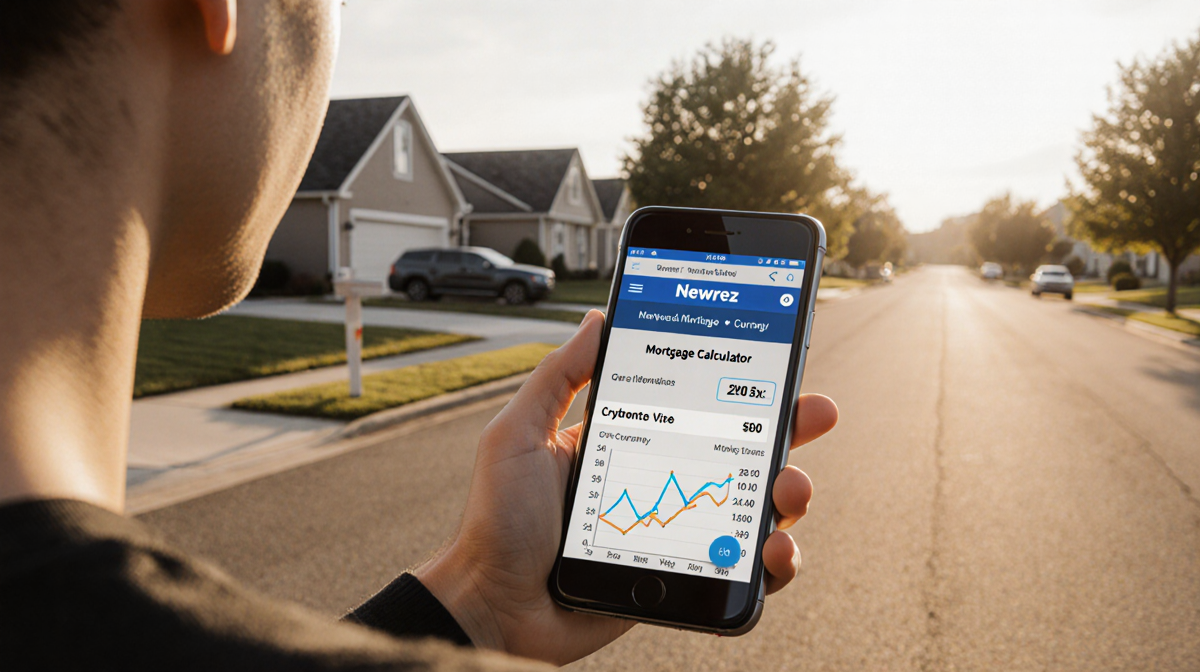
Newrez’s announcement on January 16, 2025 signals a shift in how lenders view digital assets. The Pennsylvania-based company said it will accept certain cryptocurrency holdings when evaluating mortgage applications for homes, refinancing, and investment properties, with the change taking effect in February 2025.
Newrez’s Crypto Mortgage Move
The plan allows borrowers to use crypto held on U.S.-regulated exchanges as part of the collateral or down-payment calculation. It applies to:
- Primary residences
- Refinance loans
- Investment-property mortgages
The company positions the move as a response to the Federal Housing Finance Agency’s (FHFA) 2025 guidance, which mandated that Fannie Mae and Freddie Mac develop recognition frameworks for crypto.
FHFA Guidance and Its Impact
In June 2025, the FHFA instructed the two government-backed mortgage enterprises to incorporate crypto into loan underwriting. The directive was framed as a step toward “helping ensure sustainable, long-term home ownership.”
Bill Pulte, FHFA director, emphasized that the agency’s goal was to broaden the American dream:
> “We are doing everything we can to increase affordability. One of the reasons that we are doing this with regard to crypto is because crypto has an enormous opportunity to help with affordability.”
The guidance also received praise from Bitcoin treasury chair Michael Saylor, who said the moment would be remembered as “Bitcoin entering the American dream.”
Homeownership rates in the U.S. have hovered between 60% to 70% for the past six decades, according to the Federal Reserve. However, the average age of homeowners has risen sharply-from about 39 years in 2010 to nearly 59 years in 2022-highlighting a gap for Millennials and Gen Z.
Youth and Homeownership
The median age of U.S. homeowners is almost 60, as reported by the National Association of Realtors. Institutional investors now own a large share of single-family rentals:
| City | Share Owned by Mega-Investors |
|---|---|
| Atlanta | 27% |
| Memphis | 45% |
| Birmingham | 37% |
Because most crypto owners are under 44, allowing them to use their holdings could ease entry for younger buyers.
Existing Crypto Mortgage Examples
Before FHFA’s guidance, Miami-based fintech Milo announced in 2022 that borrowers could secure 30-year mortgages using crypto while retaining ownership of the assets. Milo CEO Josip Rupena noted:
> “The existing ways for crypto consumers to access home credit has left them with unintended tax liabilities of selling for a down payment.”
This approach mirrors Newrez’s plan but differs in scope and regulatory backing.
Caveats and Risks
While the FHFA opened a door, several constraints remain:
- Crypto must be held on U.S.-regulated exchanges.
- Lenders must assess risk mitigation and may apply a “haircut” to the crypto’s valuation to account for volatility.
- Acceptance is likely limited to private-label or jumbo markets, not the broader Fannie Mae or Freddie Mac pools.
Charles Whalen, chairman of Whalen Global Advisors, told CNBC:
> “There are some lenders right now that are willing to do business based on Bitcoin. Not so much the other tokens, but I think Bitcoin is way in the lead in terms of getting this kind of recognition.”
He added that these loans are confined to the private-label sector.
Political Dimensions
Bill Pulte linked the FHFA order to President Trump’s vision of making the U.S. a crypto capital. Daryl Fairweather, Redfin’s chief economist, said the order “helps normalize crypto, helps to legitimize cryptocurrency, which I think helps the president’s agenda.” Whalen, however, viewed the move as more political than substantive.
Five senators, including Elizabeth Warren and Bernie Sanders, criticized the order in a letter, arguing that it prioritizes politics over financial risk and highlighted potential conflicts of interest.
Republican lawmakers attempted to codify the FHFA order. Wyoming Senator Cynthia Lummis introduced the 21st Century Mortgage Act in July 2025, but the bill remains in committee.
President Trump also floated ideas to reduce housing costs, such as allowing retirees to use 401(k) plans for down payments and banning large institutional investors from buying single-family homes.
Market Dynamics and Lender Acceptance
Lenders face a dilemma: while crypto can provide liquidity, converting it to dollars for bond-market sales introduces market risk. Whalen noted:
> “The mortgage market ultimately is about a lender helping you buy your house, and then they sell that loan into the bond market. That bond transaction is in dollars.”
Because of this, many major lenders are hesitant to adopt crypto-based mortgages, preferring the stability of traditional collateral.
Key Takeaways
- Newrez will accept crypto for mortgages from February 2025, following FHFA guidance.
- The move could help younger, crypto-savvy buyers enter the housing market.
- Acceptance is limited to regulated exchanges and may involve valuation adjustments.
- Political support and legislative efforts have mixed outcomes, and lender adoption remains cautious.
The evolving landscape shows that while crypto mortgages offer potential, practical hurdles and regulatory uncertainty still shape their adoption.